Key takeaways
- Reward-risk ratio only matters when the trader can actually execute the setup with the planned stop, size, and target. Clean R multiples do not save poor context, late entries, or unrealistic target placement. The real job is to turn stop distance, contract value, and drawdown buffer into a size that the account can survive. One of the first numbers to define is base per-trade risk budget: 0.25% to 0.50% of the protected loss buffer.
- R multiple is a planning tool, not proof of edge
- Base per-trade risk budget: 0.25% to 0.50% of the protected loss buffer.
- A common failure is choosing stop and target purely to achieve a preferred ratio.
Reward-risk ratio only matters when the trader can actually execute the setup with the planned stop, size, and target. Clean R multiples do not save poor context, late entries, or unrealistic target placement. The real job is to turn stop distance, contract value, and drawdown buffer into a size that the account can survive. One of the first numbers to define is base per-trade risk budget: 0.25% to 0.50% of the protected loss buffer. This guide keeps the topic practical. Instead of circling the idea in broad terms, it moves through the actual decision chain: what the topic is, which rules matter, which numbers have to be defined early, how the setup is applied, what usually breaks, and how the session should be reviewed afterward.

For reward risk ratio, the useful version is the one a trader can explain from the chart, the note, the sizing worksheet, or the alert payload without inventing missing context after the move.
What the topic means in a live funded account decision
A trader should be able to point to reward risk ratio for traders why clean r multiples still fail without context and execution discipline, risk reward ratio, R multiple trading, and trade expectancy before trusting the setup with normal size. If those nouns are not visible in the chart note, payload, sizing worksheet, or review entry, the topic is still too vague to trade cleanly.
That is what separates a topic from a label. The article has to leave the trader with something observable to verify: a level, a field, a stop distance, a review question, or a no-trade condition that can still be identified while the session is unfolding.
Use the topic to answer one blunt question before the trade: Did the trade still have the planned R after the actual entry price? If the answer stays fuzzy, the setup has not earned risk yet.
Prerequisites and context before the trade
Before the trigger matters, the trader needs the surrounding context written clearly enough that another operator could explain why the setup is valid, weak, or inactive.
Context check 1
R multiple is a planning tool, not proof of edge. This should be visible before the trade, not discovered by replaying the chart later.
If this prerequisite is missing, the trade usually becomes harder to size, harder to manage, and easier to rationalize after the fact.
Context check 2
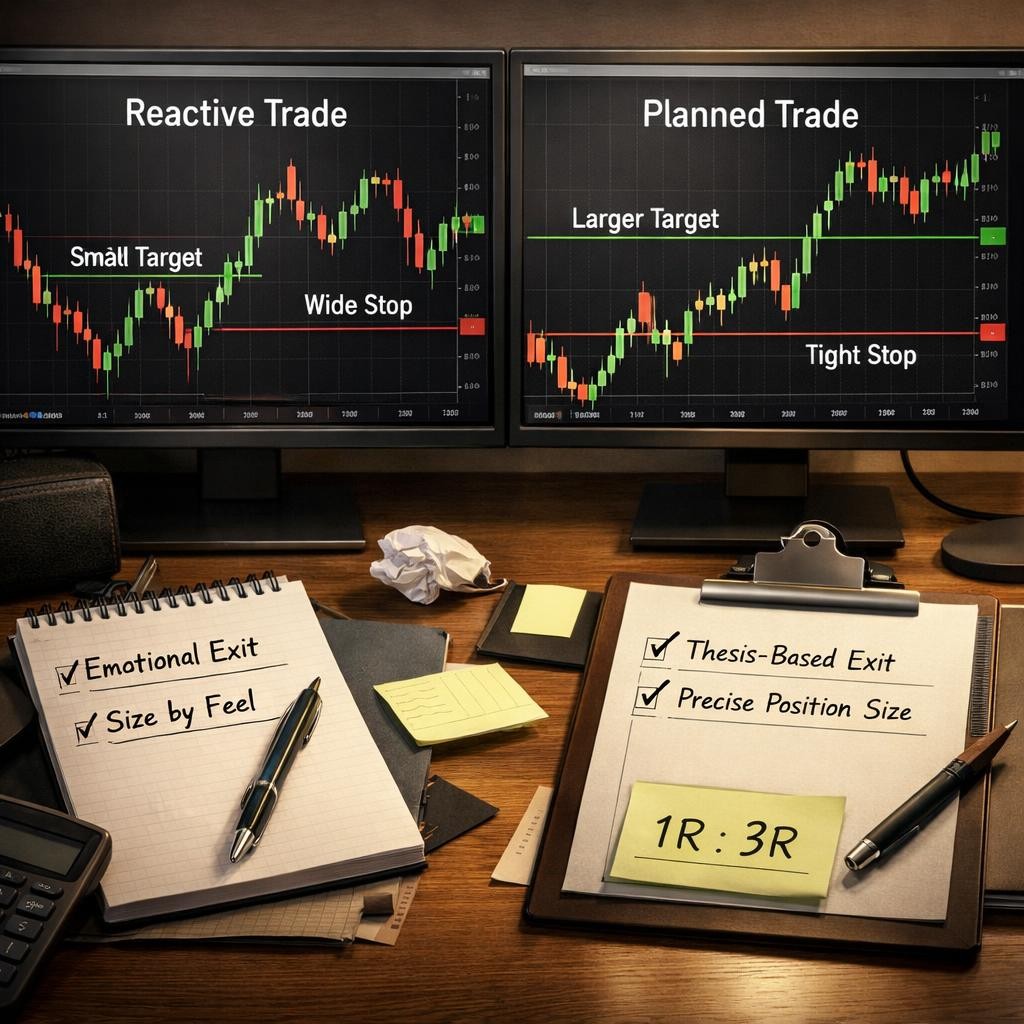
A 1:3 setup entered late or sized incorrectly often behaves worse than a 1:1.5 setup taken in clean context. If the trader cannot point to this condition before entry, the setup is still too loose to trust.
When this prerequisite is skipped, weak entries often look acceptable right up until the review exposes the missing context.
Context check 3
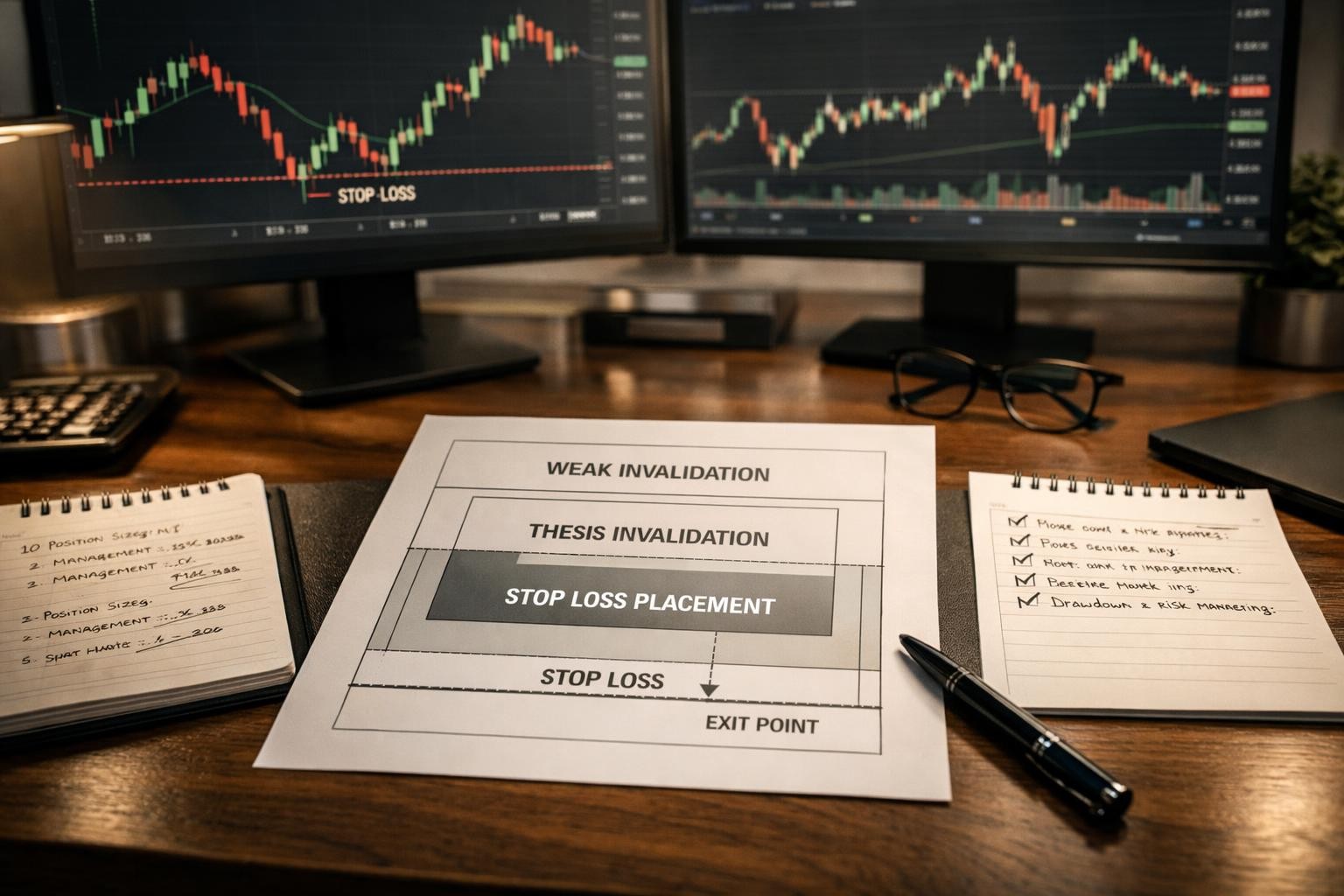
Stop placement and target logic have to come from the trade thesis, not from the desired ratio. Treat this like a written prerequisite, not a feeling that gets filled in after the move.
Missing this prerequisite usually shows up later as late entries, wider stops, or a note that cannot explain why the trade was valid.
Context check 4
Execution quality changes realized R more than spreadsheet theory admits. This belongs in the plan before the session opens so the trade can be filtered quickly under pressure.
A missing prerequisite here usually means the trader is relying on memory or optimism instead of a rule that can survive speed.
The decision rules that actually change size
These are the rules that should change the trade or the no-trade decision before execution begins.
If a rule does not change size, timing, routing, or the decision to stay flat, it is not doing much work. Good decision rules narrow the workflow before volatility speeds up and before the trader starts negotiating with the setup in real time.
Rule 1: R multiple is a planning tool, not proof of edge
If r multiple is a planning tool, not proof of edge, define the trade thesis first, then place the stop where the thesis is invalid, not where the ratio looks prettier.
Why it matters: Use the prop-account loss buffer, not the headline account size, as the real denominator for position sizing
If the rule cannot be checked quickly in the live workflow, tighten it until the decision is obvious from the note, chart, or payload.
Rule 2: A 1:3 setup entered late or sized incorrectly often behaves worse than a 1:1.5 setup taken in clean context
If a 1:3 setup entered late or sized incorrectly often behaves worse than a 1:1.5 setup taken in clean context, check whether the target is realistic for the market state and session range.
Why it matters: ES is large enough that a small mistake in stop distance or contract count changes dollar risk quickly
A strong rule is one the operator can verify in seconds without inventing missing context.
Rule 3: Stop placement and target logic have to come from the trade thesis, not from the desired ratio
If stop placement and target logic have to come from the trade thesis, not from the desired ratio, measure realized R over a sample of trades rather than obsessing over theoretical R on one chart.
Why it matters: MES gives finer control when the valid stop is too wide for a full-size ES contract under a funded-account buffer
If the rule still needs interpretation under pressure, the workflow is not ready for normal size.
Rule 4: Execution quality changes realized R more than spreadsheet theory admits
If execution quality changes realized R more than spreadsheet theory admits, define the trade thesis first, then place the stop where the thesis is invalid, not where the ratio looks prettier.
Why it matters: Readers want to understand why attractive R math is not enough by itself and how to use reward-risk in a real trading process
Use the rule to narrow the action set before the market accelerates, not to explain the trade afterward.
Key numbers and ranges to define before the trade
Strong trading tutorials surface the numbers early. They make the trader define the range, threshold, or constraint before the trigger gets attention.
Table 1: Working ranges and thresholds
| Item | Working range | Why it matters |
|---|---|---|
| Base per-trade risk budget | 0.25% to 0.50% of the protected loss buffer | Use the prop-account loss buffer, not the headline account size, as the real denominator for position sizing. |
| ES contract math | 1 point = $50 and 0.25 points = $12.50 | ES is large enough that a small mistake in stop distance or contract count changes dollar risk quickly. |
| MES contract math | 1 point = $5 and 0.25 points = $1.25 | MES gives finer control when the valid stop is too wide for a full-size ES contract under a funded-account buffer. |
These numbers should be written before the trade so they can shape the decision while the market is still moving, not after the fact. Read the item column first, then use working range to decide whether the setup still deserves risk, needs smaller size, or should be skipped outright.
Step-by-step sizing workflow
Use the topic in this order so the decision stays clear before the market starts moving too fast to improvise cleanly.
Step 1: Define the trade thesis first, then place the stop where the thesis is invalid, not where the ratio looks prettier
Define the trade thesis first, then place the stop where the thesis is invalid, not where the ratio looks prettier. This step should remove one source of ambiguity before the trade is active.
Rule to verify here: R multiple is a planning tool, not proof of edge. If that is not true, define the trade thesis first, then place the stop where the thesis is invalid, not where the ratio looks prettier.
Useful range or threshold: Base per-trade risk budget -> 0.25% to 0.50% of the protected loss buffer. Use the prop-account loss buffer, not the headline account size, as the real denominator for position sizing.
Write down what would cancel this step before the trade goes live so the review can later confirm whether the gate was respected.
Step 2: Check whether the target is realistic for the market state and session range
Check whether the target is realistic for the market state and session range. Do not move on until the evidence for this step is visible in the chart, note, or payload.
Rule to verify here: A 1:3 setup entered late or sized incorrectly often behaves worse than a 1:1.5 setup taken in clean context. If that is not true, check whether the target is realistic for the market state and session range.
Useful range or threshold: ES contract math -> 1 point = $50 and 0.25 points = $12.50. ES is large enough that a small mistake in stop distance or contract count changes dollar risk quickly.
Note the condition that would invalidate this step so the trader is not negotiating with it mid-trade.
Step 3: Measure realized R over a sample of trades rather than obsessing over theoretical R on one chart
Measure realized R over a sample of trades rather than obsessing over theoretical R on one chart. If this part stays fuzzy, the trade usually becomes harder to review honestly later.
Rule to verify here: Stop placement and target logic have to come from the trade thesis, not from the desired ratio. If that is not true, measure realized R over a sample of trades rather than obsessing over theoretical R on one chart.
Useful range or threshold: MES contract math -> 1 point = $5 and 0.25 points = $1.25. MES gives finer control when the valid stop is too wide for a full-size ES contract under a funded-account buffer.
If the evidence for this step disappears, the workflow should have a documented fallback instead of a guess.
What the setup looks like in a live session
The point of a live walkthrough is to show the order of decisions while the information is still incomplete. That is what separates a practical trading article from a post-trade narrative.
Session moment 1
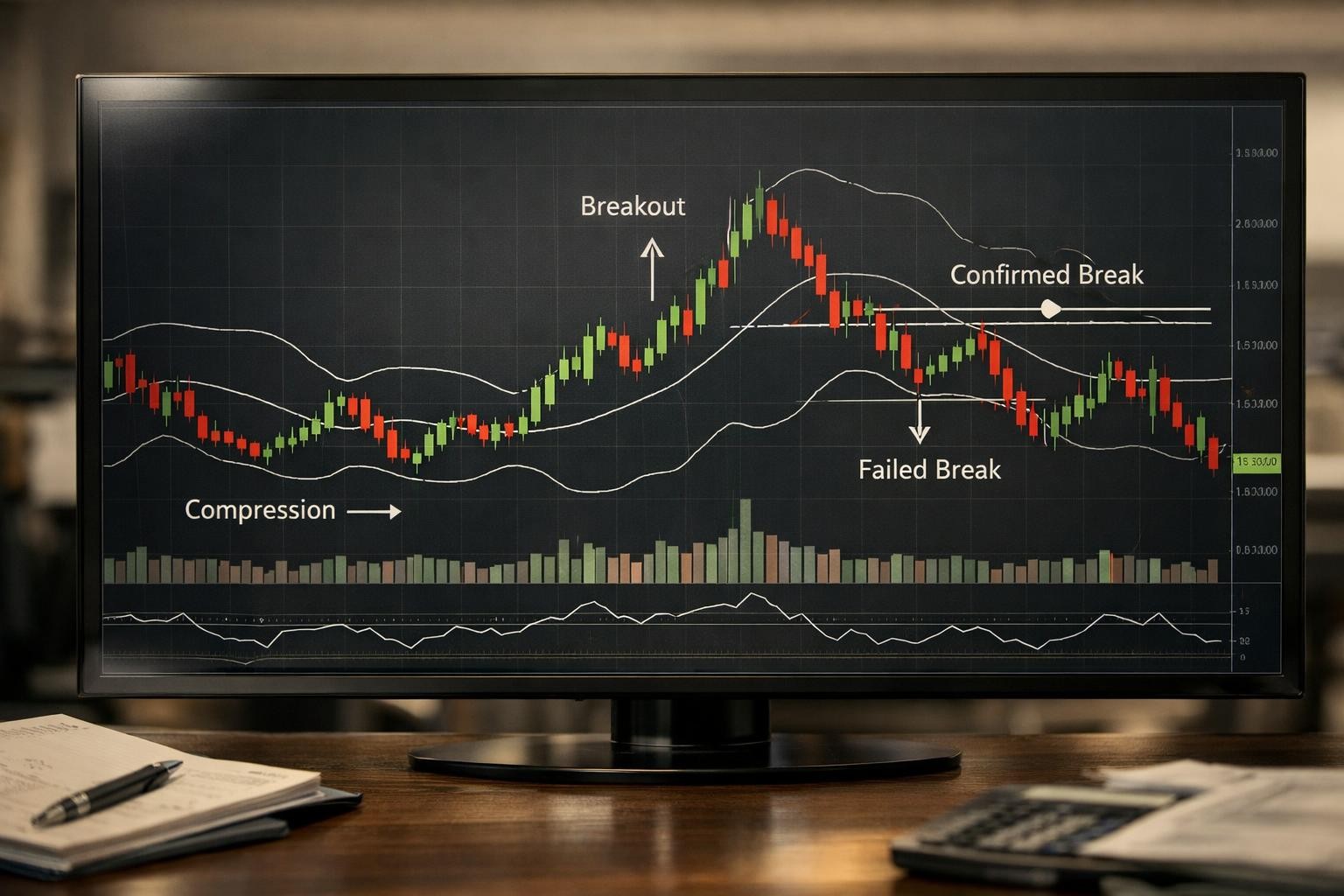
A trader sees a breakout with a large theoretical target and a tight stop. At this point the trader should be able to name the location, the condition that still makes the setup valid, and the line that would cancel it.
The useful question here is simple: Did the trade still have the planned R after the actual entry price? If the answer is still vague during the session, the trader usually needs to reduce size, wait for better evidence, or stay flat.
At this stage the operator should still be able to name the trigger, the invalidation, and the fallback response without opening a second chain of reasoning. If that answer needs storytelling, the workflow has already drifted away from the written plan.
Session moment 2
After a late entry, the real stop is no longer tight enough to keep the planned ratio, but the trader pretends the setup is unchanged. At this stage the trade should still have a clear reason to exist, a clear reason to stay inactive, and a clear reason to be abandoned if the read deteriorates.
The useful question here is simple: Was the target realistic for the market state? A fuzzy answer here is usually a sign that the setup should be downgraded, delayed, or ignored instead of forced.
The step is only useful if the trader can explain what would cancel the idea immediately, what would downgrade size, and what evidence would keep the plan intact under pressure.
Session moment 3
The disciplined move is to re-price the trade or skip it rather than forcing the original R math onto a worse entry. This is the moment where the trader has to decide whether the evidence is improving the setup or simply making the chart busier.
The useful question here is simple: Did context justify the trade, or did the trader chase the ratio? If this question cannot be answered in real time, the workflow has probably moved faster than the written process can support.
This is also where the written process proves whether it is operational or decorative. If the trader cannot point to the exact field, level, or rule that controls the next action, the setup is still too loose.
Position sizing formula and risk math
Good risk writing gets specific quickly. For reward risk ratio, the trader needs math that converts a valid stop, a contract value, and an account buffer into a size that still respects the account rules.
Formula 1: Futures position sizing
Convert the stop distance into dollars first, then fit size to the risk cap instead of fitting the stop to the preferred contract size.
contracts = floor(dollar_risk / (stop_points * dollar_per_point))
Use futures position sizing before the order is sent, not after the loss. The point is to turn futures position sizing into a yes-or-no sizing decision the desk can verify from the worksheet, the stop distance, or the account rule sheet.
Formula 2: Protected session-risk budget
Many funded traders protect the last 50% to 60% of the drawdown buffer and only trade the front portion of the cushion.
session_risk_budget = protected_buffer * risk_fraction
Use protected session-risk budget before the order is sent, not after the loss. The point is to turn protected session-risk budget into a yes-or-no sizing decision the desk can verify from the worksheet, the stop distance, or the account rule sheet.
Worked example: 50K-style funded account sizing
This is where the topic stops being motivational and starts becoming useful. The goal of the example is to show how buffer size, stop distance, and contract selection interact in a real funded-account style decision.
Worked example 1: 50K-style funded account sizing example
A trader is evaluating a 50K-style futures account with a $2,500 trailing threshold and wants a protected no-trade floor that leaves only $1,000 of the threshold available for day-to-day trading risk.
- Start with the protected loss buffer, not the notional account size: usable buffer = $1,000.
- Set max risk per trade at 10% of the usable buffer, so risk per trade = $100.
- If the stop is 5 ES points, one ES contract risks $250, which is too large, but one MES contract risks $25, so four MES contracts fit the $100 budget.
- If volatility forces the stop out to 8 ES points, one MES contract risks $40, so the trader cuts size to two MES contracts to stay inside the same $100 cap.
The important part of this example is the decision chain. The same setup may be tradable in MES and untradable in ES once the stop distance is mapped to the actual funded-account buffer.
A strong worked example should still be useful when the next chart looks different. The trader should be able to reuse the same sequence of checks, thresholds, and adjustments without needing the exact same screenshot to justify the decision.
That usually means the example leaves behind something reusable: a formula, a field check, an invalidation distance, a size adjustment, or a review prompt that can be copied into the next session plan with only the numbers changed.
Comparison table: ES vs MES risk translation
Contract size changes the decision because the same chart stop creates a completely different dollar-risk profile once the trade is mapped into ES or MES.
Table 1: ES vs MES risk translation
| Contract | Point value | Tick value | 5-point stop | 8-point stop |
|---|---|---|---|---|
| ES | $50/point | $12.50/tick | $250 risk | $400 risk |
| MES | $5/point | $1.25/tick | $25 risk | $40 risk |
Micro contracts let funded traders keep valid structure-based stops without oversizing the same idea by 10x. Read the contract column first, then use point value to decide whether the setup still deserves risk, needs smaller size, or should be skipped outright.
When to cut size or stop for the day
Thresholds protect the account when the trader is most tempted to widen exceptions. Good threshold rules are written before the session so they can be followed while frustrated.
Table 1: When to cut size or stop for the day
| Trigger | Action | Why it matters |
|---|---|---|
| Down 2R on the session | Cut size by 50% | Protect decision quality before frustration turns into rule drift |
| Down 3R or 30% of daily buffer | Stop for the day | Most funded-account damage comes from trying to win it back immediately |
| Two rule violations in one session | Flat for the day and review | Process drift, not setup quality, is now the main risk |
Threshold rules should be decided before the session so size reduction is mechanical instead of emotional. Read the trigger column first, then use action to decide whether the setup still deserves risk, needs smaller size, or should be skipped outright.
Troubleshooting and failure modes
This is where the topic usually breaks in real trading: not because the trader never heard the idea, but because the implementation drifted away from the rule.
Symptom 1: Choosing stop and target purely to achieve a preferred ratio
Likely cause: R multiple is a planning tool, not proof of edge
Fix: Define the trade thesis first, then place the stop where the thesis is invalid, not where the ratio looks prettier
Correct the workflow before the next trade instead of writing a cleaner excuse for the last one.
Symptom 2: Ignoring slippage and entry quality when calculating R
Likely cause: A 1:3 setup entered late or sized incorrectly often behaves worse than a 1:1.5 setup taken in clean context
Fix: Check whether the target is realistic for the market state and session range
The fix only counts if the next simulation proves the workflow changed in a measurable way.
Symptom 3: Taking low-quality trades just because the target distance looks large on the chart
Likely cause: Stop placement and target logic have to come from the trade thesis, not from the desired ratio
Fix: Measure realized R over a sample of trades rather than obsessing over theoretical R on one chart
A troubleshooting note should end with a changed rule, not with a more flattering explanation.
When the topic should stay inactive
A strong guide should also tell the trader when the setup does not deserve capital. That is where the written rule often protects more money than the entry pattern itself.
No-trade filter 1
Choosing stop and target purely to achieve a preferred ratio. If that condition is already visible before the order is sent, the cleaner decision is usually to pass, reduce size, or wait for a better version of the setup.
This filter matters most on the days when the trader is tempted to force the setup because the session is active but not actually clean.
A no-trade filter is part of the edge because it protects the conditions that make the next clean setup worth trading. If the filter is already broken before entry, the account usually benefits more from preserved capacity than from another forced attempt.
No-trade filter 2
Ignoring slippage and entry quality when calculating R. When that condition is already obvious, the setup is usually stronger as a no-trade decision than as a forced entry.
Most avoidable damage starts here, when a trader knows the condition is weak but still wants the label to count as permission.
This is where discipline protects future opportunity. Passing on a broken setup keeps capital, attention, and rule integrity available for the next trade that actually deserves them.
No-trade filter 3
Taking low-quality trades just because the target distance looks large on the chart. If this is already on the screen before the order is sent, staying flat usually protects more edge than arguing with the label.
The test is not whether the setup can be defended afterward. The test is whether it deserves capital while the evidence is still incomplete.
The practical job of this filter is to preserve decision quality. When the warning sign is already obvious before entry, protecting the account is usually the higher-value trade.
Live checklist and review framework
This section should leave the trader with a short list that can be used before the session and again after it. This is what keeps the topic actionable.
Before the trade
- Set the stop from thesis failure, not desired R
- Ask whether the target fits volatility and session range
- Track realized R and skip-count, not only chart-book R
- Account for slippage and execution quality
- Review whether the ratio supported discipline or just justified the trade
After the session
- Did the trade still have the planned R after the actual entry price
- Was the target realistic for the market state
- Did context justify the trade, or did the trader chase the ratio
If the answers stay vague, the next revision should simplify the rule instead of adding another exception.
A good checklist section should shorten tomorrow’s decision, not just summarize today’s. The output of this review is usually one cleaner trigger, one clearer filter, or one narrower risk rule that makes the next live session easier to execute honestly.
That is also how the article becomes practical over time. The trader should be able to reuse the same before-trade checklist and after-session questions across multiple market conditions without rewriting the standard from scratch every time.
If the checklist cannot be copied into tomorrow’s prep and still make sense, it is probably summarizing the session instead of improving the process.
Bottom line
Reward-risk ratio for traders: why clean R-multiples still fail without context and execution discipline should give the trader a better live decision, not a better post-trade explanation. The durable version of this topic is the one that survives the note, the chart, the sizing rule, and the review without needing hindsight to make it look coherent.
If you remember only one thing, make it this: R multiple is a planning tool, not proof of edge Then check Base per-trade risk budget before sending risk. That combination usually does more to improve results than adding more opinions or more indicators.
The practical edge comes from documenting the workflow clearly enough that the next session starts with fewer assumptions, fewer avoidable mistakes, and a much cleaner answer to the question of whether the setup deserves risk at all.
That is the real standard for reward risk ratio: the article should leave behind a rule the trader can execute, audit, and improve under pressure. If the write-up cannot survive a live checklist, a sizing worksheet, or a routing log, the idea is still too soft for capital.
The version worth keeping is usually not the most complicated one. It is the one that helps the trader make the next real-time decision faster, with fewer assumptions, clearer failure points, and a better reason either to take the trade properly or to stay out of it completely.
If the article did its job, the trader should be able to carry one or two lines from it straight into the next plan: the condition that proves the setup, the condition that cancels it, and the response that protects capital when the read weakens. That is the difference between helpful trading guidance and content that only sounds disciplined.
Frequently asked questions
Is a higher reward-risk ratio always better?
No. A higher planned ratio only helps if the setup is real, the entry is executable, and the target makes sense for the market.
Why do traders misuse R multiples?
They often reverse the process by picking the ratio first and then forcing the stop and target to fit it.
What should reward-risk be used for?
It is best used as a planning and review tool that sits alongside context, execution quality, and actual expectancy.
Newer
Trading journal workflow: what to review after each session if you want better decisions instead of more screenshots
Older